- Industry News
- 819
- Gearpioneer-Powering Smart Work EveryWhere
- 13/04/2026
A Comprehensive Guide for Procurement: How to Select the Right Commercial Cleaning Robot Supplier
A detailed procurement guide for selecting a reliable commercial cleaning robot supplier. Learn how to evaluate manufacturing capabilities, product specs, certifications, and commercial terms to find the right partner for hospitals, warehouses, malls, and offices.
A Comprehensive Guide for Procurement: How to Select the Right Commercial Cleaning Robot Supplier
The global market for commercial cleaning robots is expanding rapidly, driven by labor shortages, rising operational costs, and the demand for consistent hygiene standards. For procurement professionals, selecting the right supplier is a critical decision that impacts operational efficiency, total cost of ownership, and long-term service reliability. This guide outlines a structured framework to evaluate and identify a suitable commercial cleaning robot supplier.
1. Define Your Operational Requirements
Before evaluating suppliers, clearly define your specific needs. Commercial cleaning robots are deployed in diverse environments, each with unique challenges.
Primary Application Scenes
- Hospitals & Healthcare Facilities
- Malls & Retail Spaces
- Airports & Transportation Hubs
- Warehouses & Factories
- Hotels & Office Buildings
- Schools & Campuses
- Supermarkets
Key Performance Parameters
- Cleaning Width & Speed
- Battery Runtime & Charging Time
- Water Tank Capacity
- Navigation Accuracy & Autonomy
- Floor Type Compatibility
- Noise Levels
2. Evaluate Supplier Manufacturing & Technical Capabilities
A supplier's infrastructure and technical prowess are strong indicators of product quality and scalability. Look for the following capabilities.
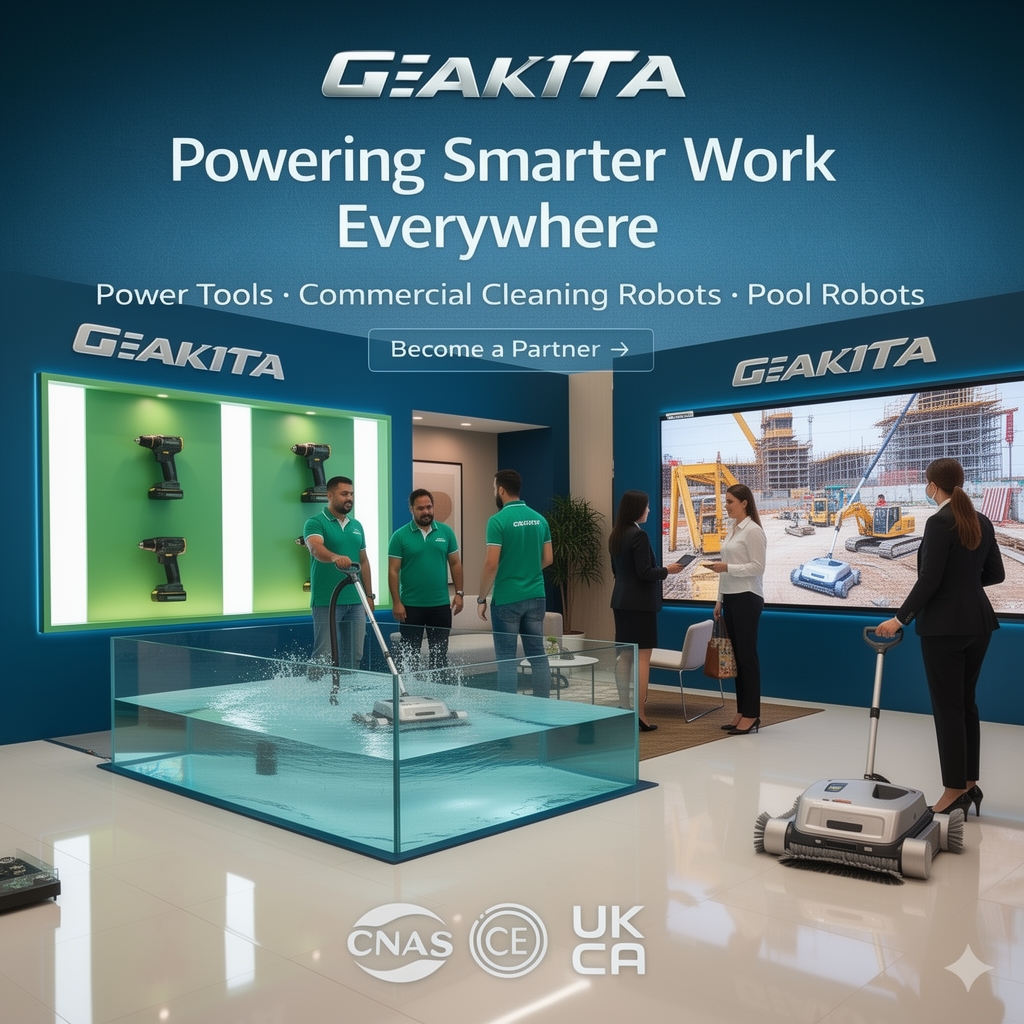
Example Supplier Profile: Geakita
Company: Geakita (Xiamen Tiangong Kaiwu Technology Co., Ltd.)
Established: 2009
Factory Size: 40,000 square meters
Employees: 300+ staff
R&D Team: 25 engineers
Annual Output Capacity: 100,000+ units
Main Products: Power tools, robotic pool cleaners, and commercial cleaning robots.
Geakita is a member of the Power Tool Sub-Association of the China Electrical Equipment Industry Association. The company operates a modern industrial base with advanced workshops and testing facilities.
Key Capability Checklist:
- Production Scale: Assess monthly/annual output capacity to ensure they can meet your order volume and delivery timelines.
- R&D Investment: A dedicated engineering team indicates innovation and product development potential.
- Quality Control Systems: Inquire about in-house testing, inspection procedures (IQC/IPQC/FQC), and compliance with international standards.
- Supply Chain Stability: Reliable sourcing of key components (motors, batteries, sensors) is crucial for consistent quality.
3. Scrutinize Product Specifications & Compliance
Technical specifications must be transparent and verifiable. Ensure the product meets the operational demands of your intended application scenes.
| Parameter | Specification |
|---|---|
| Dimensions | 503 × 503 × 629 mm |
| Weight | 40 kg |
| Water Tank Capacity | 10L clean water + 10L wastewater |
| Battery & Charging | 1 kWh swappable battery, 3-hour charge, 5–12 hours runtime |
| Cleaning Width | 440 mm |
| Adjustable Speed | 0.2–0.8 m/s |
| Navigation Accuracy | ±1 cm |
| Applicable Scenes | Hospitals, malls, campuses, exhibition halls, offices, airports, hotels, restaurants |
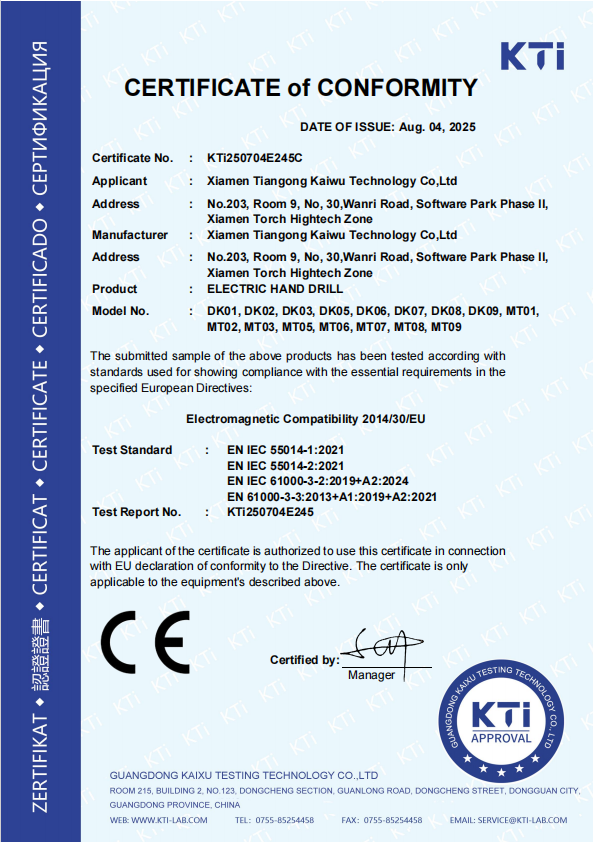
Certification & Compliance: Mandatory certifications are non-negotiable for market access and safety. A credible supplier should hold relevant certifications for their target markets.
- CE Marking (EU): Certificate number KTi250704E245C, issued by KTi, valid until 2030-08-04, complying with EN IEC 55014 61000 standards.
- UKCA (UK): Certificate number B-S2412C5162, issued by baide in December 2024.
- CMA (China): Certificate №: WTS2026-S0339, issued by 浙江中协立德质量检测技术有限公司 (Zhejiang Zhongxie Lide Quality Testing Technology Co., Ltd.), complying with GB 3883.1-2014 / GB/T 3883.202-2019.
4. Assess Customization, Support & Commercial Terms
Beyond the core product, evaluate the supplier's flexibility and support structure.
Customization Options
Suppliers offering OEM/ODM services provide greater flexibility. Common customization areas include:
- Logo Printing & Packaging Design
- Voltage Customization (e.g., for different regions)
- Parameter Adjustment (Speed, Torque for specific tasks)
- Battery Configuration
- Color Schemes
Procurement & Logistics
Clear commercial terms are essential for a smooth partnership.
- MOQ: Standard models may start from 100 units per SKU; customized orders may have higher minimums.
- Lead Time: Mass production typically takes 30-45 days; repeat orders 20-28 days.
- Delivery: Common terms include FOB, EXW, or DDP.
- Payment: Typical terms are 100% T/T or 50% deposit with 50% against Bill of Lading.
After-Sales & Warranty
Reliable post-purchase support minimizes downtime.
- Global Warranty Period (e.g., 1 year)
- Availability of Technical Support (7*24)
- Policy for Defective Unit Replacement
- Spare Parts Supply Chain
5. Verify Track Record & Industry Reputation
Investigate the supplier's history and client feedback.
- Client Portfolio: Request case studies or references from clients in similar industries (e.g., construction, automotive repair, facility management).
- Export Experience: Suppliers with established export channels to regions like Europe, Southeast Asia, and the Middle East are familiar with international logistics and compliance.
- Performance Metrics: Inquire about historical performance data such as on-time delivery rates and defect rates from past projects.
Conclusion: A Structured Selection Process
Selecting a commercial cleaning robot supplier is a multi-faceted process. By systematically evaluating a supplier's manufacturing capabilities, product compliance, customization options, commercial terms, and market reputation, procurement professionals can make an informed decision that balances immediate needs with long-term strategic value. The goal is to partner with a supplier that is not just a vendor but a reliable contributor to your operational efficiency and hygiene standards.
Final Recommendation: Develop a weighted scorecard based on the criteria above. Conduct factory audits (virtual or in-person) where possible, and always start with a pilot order before committing to large-scale procurement.